Acupuncture for Lower
Back & Hip Pain
in Ottawa
Long hours at a desk are part of the workday for many Ottawa public servants, tech professionals and remote workers—and this sedentary routine doesn’t affect only the neck and shoulders, the lower back and hips often feel it too. The lower back, pelvis and hips form the body’s central foundation. They help keep us upright while transferring force between the upper and lower body whenever we stand, walk, bend or lift. Because they are involved in nearly every movement we make, its common for pain symptoms in this region to manifest.
Are you dealing with lumbago, a nagging ache around the hip, discomfort that keeps returning even after you “crack” your back, or stiffness after a long day at work? My whole-pattern approach to acupuncture may help. Read on to learn how.
The Body’s Central Fulcrum
The lower back, pelvis and hips function much like a fulcrum between the upper and lower body. They help transfer force between the trunk and legs while keeping us balanced as we stand, walk, bend and lift. When movement becomes restricted or poorly coordinated around this central point, the body may compensate above or below it—placing additional strain on the lower back, hips and surrounding muscles.
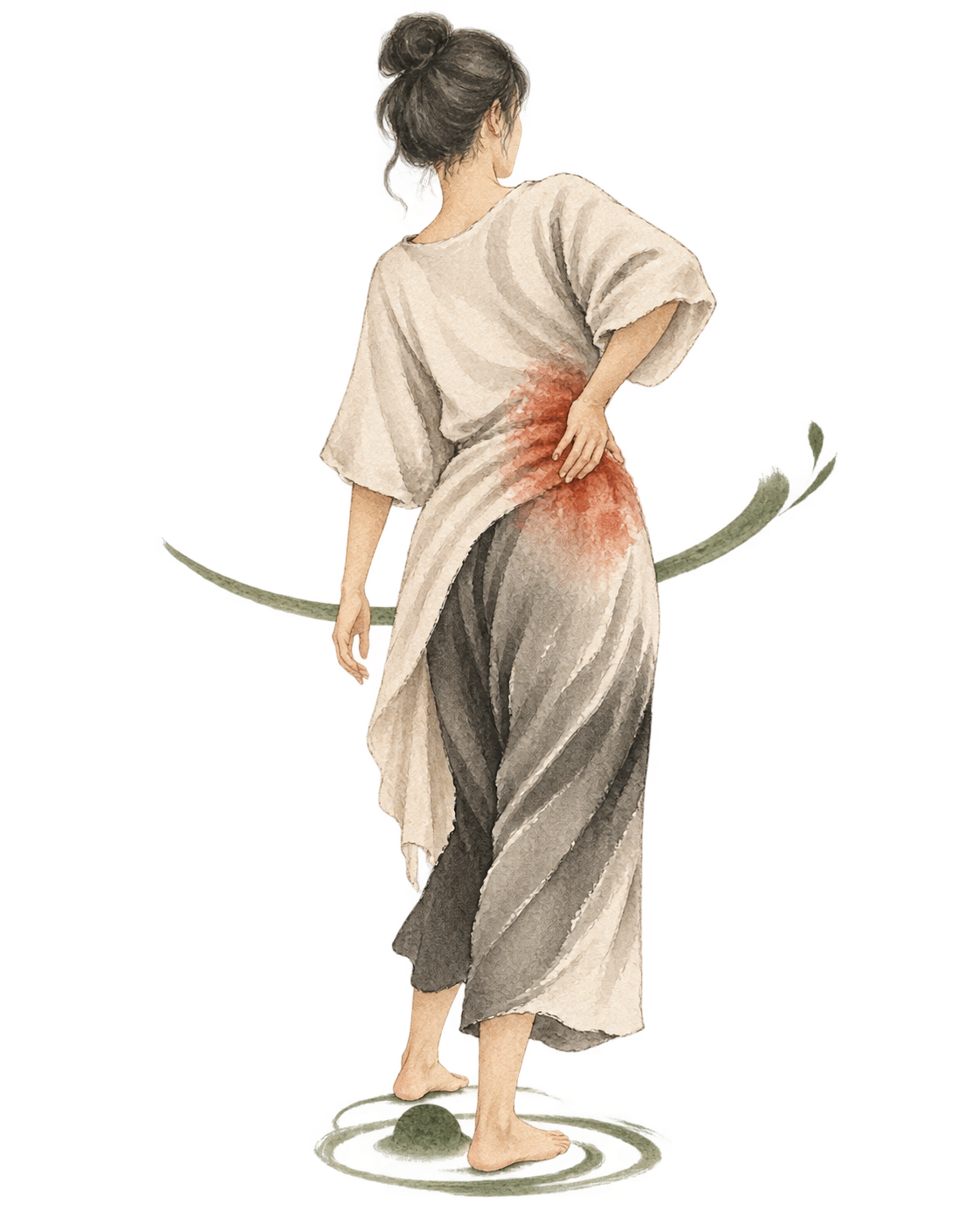
Let’s focus on one example. We have an ache in the lower back and upon examination, there is accompanying stiffness and poor range of motion in through the hips. This is a very common presentation I see in my practice. Reduced control through the pelvis or trunk may cause certain muscles to remain tense in an attempt to create stability. Maybe couple this with a weak core unable to stabilize with the lower back and now your lower back muscles are on triple duty; it can’t take much more anymore. Even the calves and feet are usually involved in these patterns.
This reoccurring theme of interconnected relationships is always present when we consider pain and function of the human body. It is also ever present in the philosophy of Traditional Chinese Medicine—The place that hurts most is not the only place that needs attention. In this specific example we would need to release tension and resulting inflammation in the lower back, retrain the core to better help the lower back the stabilize our trunk through movement, and address the hip’s range of motion. In Traditional Chinese Medicine terms, this would be considered tonifying what is deficient, mobilizing Qi and blood where there is stagnation and then strengthening the relationship between the parts.
Even the term for lower-back pain in Chinese is formally “腰腿疼“ which is translated as “lower-back-leg pain” or “pain through the lower back to leg” Rather than treating the lower back as an isolated structure, I consider how the broader pattern presents throughout your body—where movement feels restricted, where tension has accumulated and where the body may be compensating.
Common Pieces of the Pattern
for Lower Back and Hip Pain
If you experience lower back and hip you may also have these experiences:
Tight QL or Erector Spinae
Restricted hip rotation
Poor core control, tight hip flexors
Forward head posture
Anterior pelvic tilt
Foot dysfunction(low/high arches)
Stiff hamstrings or calves
Sciatic symptoms
Hip drop/hike
Knee pain
What Treatment May Include
Acupuncture
Fire Cupping
Tuina & Acupressure
Home Exercises
01
Consultation & Assessment
We begin with a conversation about your symptoms, relevant health history and lifestyle, followed by a physical assessment to understand the full pattern of your lower back and hip pain.
What to Expect
02
Individualized Treatment
You’ll receive a personalized treatment plan using acupuncture and other therapies tailored to your specific pattern.
03
Recommendations & Follow Up
We’ll discuss self-care strategies and helpful exercises you can easily implement through-out your day. We’ll also touch on expectations moving forward and monitor your progress to support lasting results.
Frequently Asked Questions for Lower Back and Hip Pain
-
My acupuncture technique is generally well tolerated as is any when performed by a trained practitioner. You may feel a mild pinch as a needle is inserted, although many people feel very little. During treatment, sensations such as warmth, heaviness, tingling or a gentle radiating feeling can occur. If anything feels sharp, uncomfortable or concerning, you are encouraged to let me know so the needle can be adjusted.
-
Several regulated health professionals may incorporate acupuncture into their practice, but their education, scope and treatment approach can differ. As a Registered Acupuncturist, my formal education and licensing are specifically focused on acupuncture and Traditional Chinese Medicine. Acupuncture is not an additional technique within my practice—it is my primary profession.
Insurance coverage may also be applied differently. Treatment provided and billed by a Registered Acupuncturist is submitted under the acupuncture portion of an extended health plan. When acupuncture or dry needling is incorporated into physiotherapy, it is still billed as physiotherapy and applied toward the plan’s physiotherapy allowance. Coverage varies by insurer and individual plan, so patients should still confirm their eligibility directly with their benefits provider. -
Unfortunately, there is no one-size-fits-all answer. The number of treatments depends on how recently the pain began, how often it returns, what may be contributing to it and how your body responds. Someone with a recent strain or crick may notice relief relatively quickly. Long-standing or recurring pain—particularly when it has developed over many years or involves broader changes in movement and muscle tension—may benefit from a series of treatments delivered closer together at the beginning.
After your initial session, I will recommend a starting schedule based on your individual presentation. We will reassess your symptoms and movement at every visit, adjusting the frequency as you improve. My goal is not to keep you in treatment indefinitely, but to help you reach a point where appointments can be reduced, spaced farther apart or concluded.
-
No special preparation is required. After booking, you will receive an intake form to complete before your appointment. This gives me a general understanding of your health history and current concerns so we can make the most of our time together.
Please wear comfortable, loose-fitting clothing that allows sleeves and pant legs to be rolled up easily. Depending on the area being treated, appropriate draping will be provided when necessary.
-
Although I highly recommend acupuncture as part of the treatment plan, I understand you may be hesitant, especially if acupuncture is new to you. We can definitely explore needle-free options during your session. Treatment is always tailored to your comfort level and individual needs.
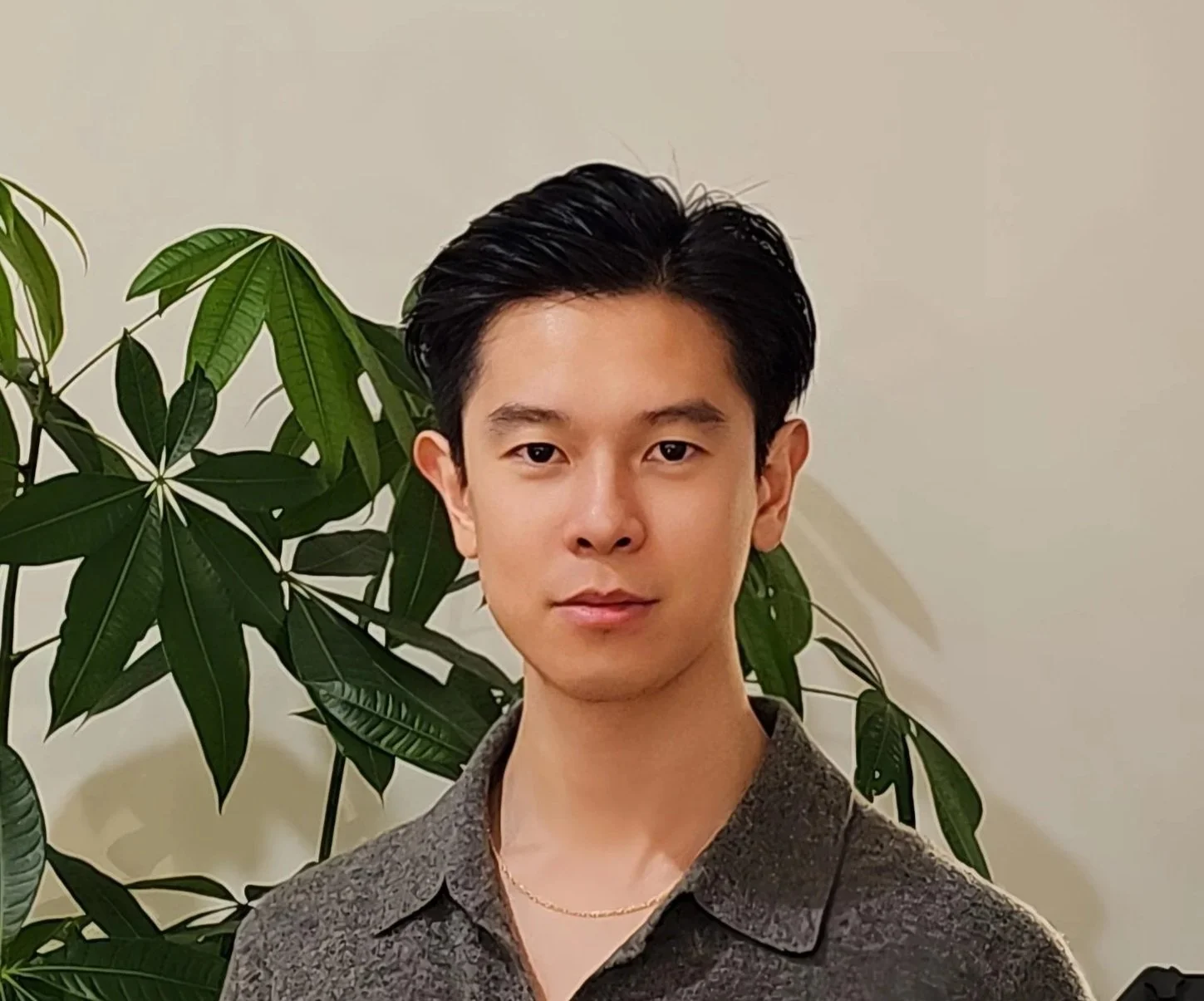
About Colin (Me)
Registered Acupuncturist
Practising in Ottawa since 2013
I am a Registered Acupuncturist with the CTCMPAO and have been practising in Ottawa since 2013. Drawing on a family connection to Traditional Chinese Medicine and a background in Health Sciences, I combine traditional Eastern philosophy of function and relation with a modern understanding of anatomy, physiology and movement to provide effective, individualized care.